
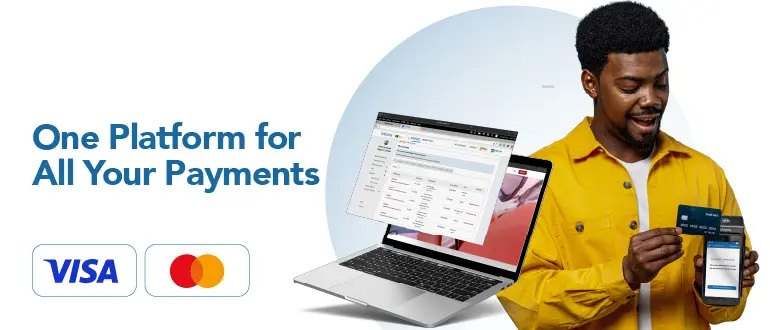
Why Zambian SMEs Need One Payment Platform to Manage It All
What happens when a business accepts payments from five different systems but cannot trace where half the money went?
Many Zambian SMEs face this reality every day, combining mobile money, POS machines, and online transfers that rarely reconcile. The truth is that too much choice, instead of creating convenience, has created confusion.
For decades, Zambia’s economy has relied heavily on cash transactions. However, the rise of digital finance has changed this landscape dramatically. More Zambians now use mobile money services, while debit and credit card usage continues to rise in urban centres.
Sabipay Technologies
The Bank of Zambia has encouraged these changes by licensing new digital payment providers. In 2024, Sabipay was granted a Payments System Business license, enabling SMEs to accept cards, mobile money, and even global wallets like Apple Pay under one platform.
Some business owners argue that using multiple payment providers is safer because it spreads the risk. Yet, others point out that fragmented systems increase costs, complicate financial reporting, and slow down customer service. The trend, both locally and globally, is leaning toward consolidation, where one platform handles every transaction in one place.
The best way for SMEs to grow sustainably is by adopting a single payment platform because it:
Simplifies operations
Enhances customer satisfaction
Strengthens financial management
Reduces costs
Supports long-term scalability
1. Simplified Operations
SMEs in Zambia need one payment platform because it simplifies day-to-day operations. Instead of using several devices and systems, one dashboard can record every sale, whether through mobile money, card, or online payment. This eliminates the time spent cross-checking multiple reports.
Sabipay, for instance, allows you to manage all settlements in a single dashboard, meaning you no longer need to compare statements from mobile money and bank POS separately. This unification reduces errors and creates an orderly business environment. Streamlined operations free your SME from administrative chaos, allowing you to focus on serving customers and growing your business.
2. Enhanced Customer Satisfaction
Customers are more likely to return to businesses that make paying easy. Zambians use different payment methods depending on their preferences and circumstances. A business that fails to accept a customer’s preferred method risks losing that sale. With Sabipay, SMEs can accept nearly every option, including mobile wallets, Visa, Mastercard, and international platforms like Google Pay. This flexibility ensures customers never feel excluded.
By unifying payments, SMEs create seamless experiences that build trust, loyalty, and repeat business.
3. Stronger Financial Management
SMEs need one payment platform because it improves financial control and reporting. When payments are spread across different systems, reconciliation becomes slow. You spend hours matching receipts with bank statements, often discovering mismatches. A unified platform automatically generates clean reports, tracks refunds, and simplifies compliance. With Sabipay, payouts are predictable and records export directly to accounting software, giving you the clarity you need for decision-making. Consolidating payments leads to cleaner books, accurate forecasting, and better long-term financial planning.
4. Reduced Costs and Risks
Multiple payment systems cost more money and expose SMEs to higher risks. Every separate system comes with extra fees, hardware costs, transaction charges, and sometimes even staff training. More systems also mean greater exposure to fraud and human error. By adopting one platform, SMEs can negotiate better rates and rely on a secure licensed provider. This reduces overhead while ensuring transactions are encrypted and compliant with global security standards. Fewer systems translate into lower costs and stronger protection for both businesses and their customers.
5. Growth and Scalability
SMEs must plan for the future, and one payment platform makes growth easier. A business that starts with fragmented systems struggles when expanding to new branches or moving online. A unified platform, however, grows smoothly by supporting multiple outlets, online checkouts, invoicing, and even ticketing. Sabipay, for instance, offers plugins and APIs that help SMEs integrate into e-commerce platforms or mobile apps without starting over.
This means businesses can move from a single shop in Lusaka to an online store serving customers across Zambia and beyond. A unified payment platform lays a solid foundation for SMEs to expand confidently into new markets and opportunities.
Why get a single payment platform
Zambian SMEs are the backbone of the economy, but the inefficiencies of scattered payment systems slow their growth. Sabipay, licensed by the Bank of Zambia, proves that a single platform can bring order to this chaos. By simplifying operations, enhancing customer satisfaction, improving financial management, reducing costs, and supporting scalability, one payment platform empowers SMEs to focus on what matters most: serving customers and building sustainable growth. In a market where competition is fierce and customers expect convenience, SMEs that consolidate payments gain a clear advantage.
Talk to us today to find out how a single payment platform can transform your business.