
How Unified Payments Boost Efficiency
What if the very tools meant to simplify business payments were creating hidden costs? In Zambia, many small and medium enterprises (SMEs) combine multiple payment providers, mobile money here, card payments there, and sometimes even bank transfers.
On the surface, it appears to be a variety; however, it’s a fragmented system that drains efficiency.
Zambia has experienced explosive growth in digital finance. According to Bank of Zambia data, mobile money transaction values crossed K200 billion in recent years, with millions of users relying on Airtel Money, MTN Mobile Money, and Zamtel Kwacha. Add to that the growing adoption of debit and credit cards, bank apps, and e-wallets, and the payment landscape looks rich.
But for SMEs, this diversity often creates confusion. Managing multiple payment providers means tracking different dashboards, reconciling disjointed reports, and incurring numerous transaction fees. The result? Time loss, accounting headaches, and missed growth opportunities.
Sabipay
We are a leading payment services company with local know-how in building payments and business tools for Africa. Since 2009, we've empowered tens of thousands of African businesses and entrepreneurs to collect money online and in-person via mobiles and cards.
The best way for SMEs to transition from payment chaos to operational clarity is by adopting a unified payment solution.
This shift enhances efficiency in five key ways:
1. Unified payments reduce reconciliation errors
When SMEs deal with multiple providers, each platform generates its own statements and reports. Matching mobile money transfers with card payments and bank deposits can take hours. Errors creep in easily, whether it’s misrecorded amounts, missed receipts, or double entries. By consolidating all payment channels into one Sabipay dashboard, you eliminate duplication and simplify bookkeeping. This allows you to spend less time chasing discrepancies and more time focusing on growth.
2. Unified platforms cut down transaction costs
Every provider charges differently. Some charge higher percentages for mobile money, while others have hidden fees for transfers. Businesses that use multiple providers often end up paying more than they should. With Sabipay, costs are standardized and optimized. You can negotiate better rates by consolidating volume through one provider, saving money that can be reinvested in stock, salaries, or expansion.
3. Unified systems improve customer experience
Customers expect flexibility, some prefer mobile money, others debit cards, and some even traditional bank transfers. But when you use different, unconnected payment systems, customer transactions can feel bulky. Delays in confirmation or payment rejections hurt trust. We solve this by offering customers multiple payment options within one smooth process. Whether a customer pays with Airtel Money or a Visa card, the business receives it seamlessly in one account, enhancing trust and loyalty.
4. Centralized data gives businesses better insights
Data is power. However, when transactions are spread across different providers, valuable insights can get lost. How do you know which channel drives the most revenue? Which days bring in the most sales? Without unified data, SMEs operate in the dark. We centralizes this information, providing businesses with a clear picture of cash flow and customer behavior. With better insights, you can make more informed decisions, such as adjusting inventory, running targeted promotions, or expanding into new markets.
5. Unified payments unlock scalability
Growth requires structure. For an SME in Zambia, expanding from one shop to multiple branches or from Lusaka to Kitwe becomes a nightmare if payments are scattered across providers. Each location ends up managing its own chaotic systems. With our tailored solutions, you can grow with clarity. Payments from all branches, channels, and regions are consolidated into a single platform. This structure supports expansion while maintaining efficient and straightforward operations.
CONCLUSION
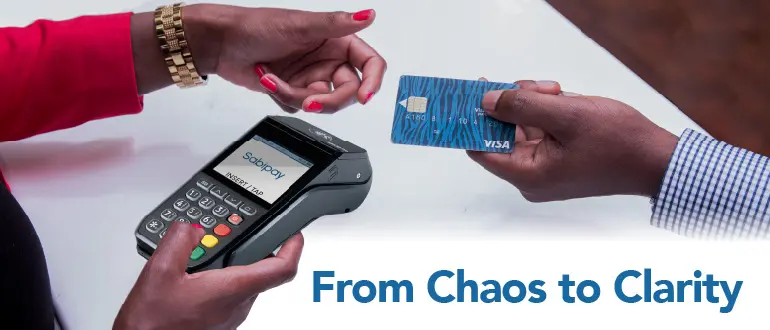
The path from chaos to clarity in Zambia’s payment ecosystem lies in unification. While multiple providers offer the appearance of flexibility, they actually hinder businesses with errors, costs, and inefficiencies.
We transform this reality by centralizing payments, reducing costs, enhancing customer trust, delivering actionable insights, and enabling scalable growth. For SMEs eager to move from confusion to confidence, unified payments aren’t just a convenience; they’re the foundation for lasting efficiency.